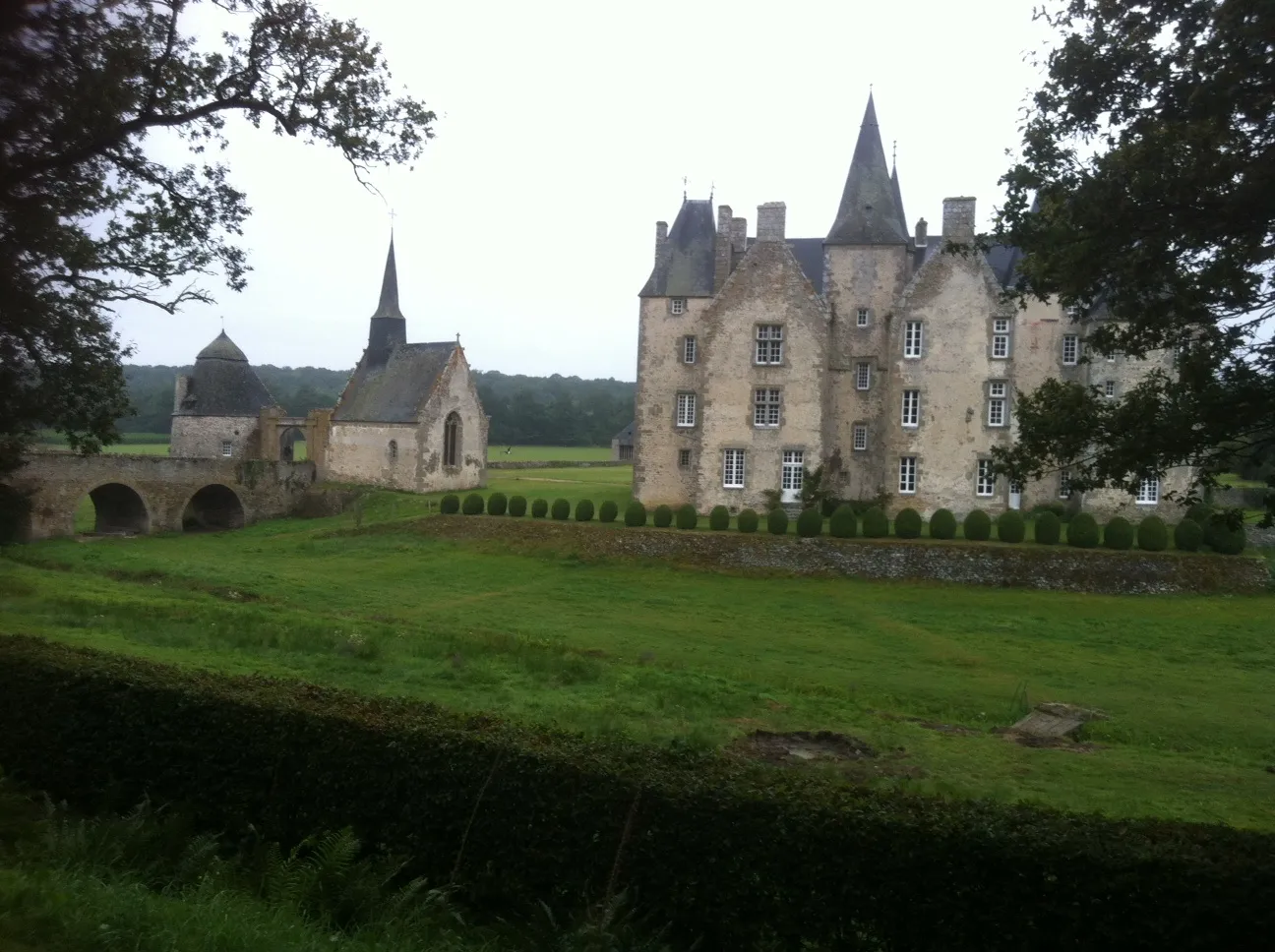
**A black stork was spotted several times at Bourgon Castle and, most notably, photographed with an iPhone on the morning of August 14, 2012.** It was feeding in the wetlands and took flight at the slightest movement.
We invite you to enjoy this wonderful event. The Black Stork is the
the only species of stork that breeds regularly in Anjou
. As a protected species, it is one of the symbols of biodiversity. (ONF).
She is t
very rare in France
, with only about 30 breeding pairs. In Maine-et-Loire, the species is
First sighting of a nesting pair in 1982
, but it is likely that it has reproduced before, as its behavior is very discreet and the species easily goes unnoticed during the breeding season.
The species settles in old deciduous forests, but the Anjou black stork has been able to take advantage of the old plantations of
Marine Pines and settles in the large planted forests in the eastern part of our department.
The Black Stork is less well known than its white cousin, which nests on chimneys in Alsace. More discreet and shy, it prefers the cover of the forest. But like its white cousin, it migrates every year, crossing Southern Europe and Africa to spend the winter months in warmer climates.
Meet this protected species, which is slowly reestablishing itself in Western Europe.  A black stork perched in the moat in front of the first arch of the bridge
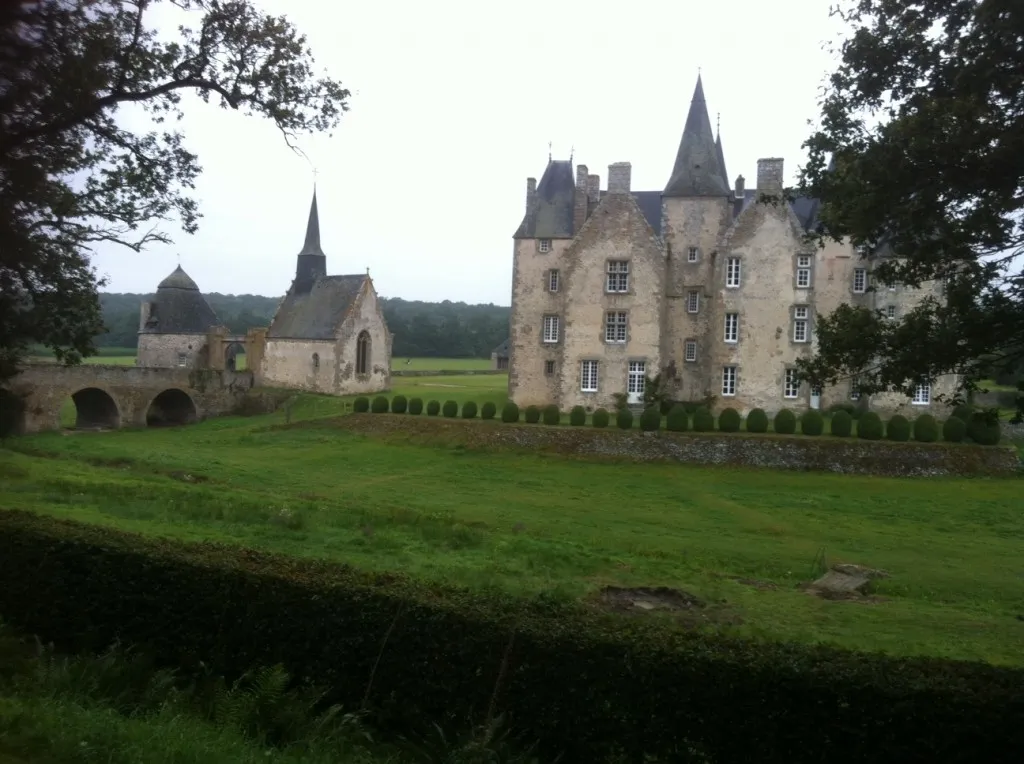 The black stork avoids humans and builds its nest deep within large forest areas.**A diurnal bird, it frequents small streams, mudflats in shallow bodies of water, marshes, and wet meadows within a 5- to 10-km radius of its nest.**It can be found perched in a tree or resting in a wetland where it is foraging for food.

Most often, a single bird is seen, or, toward the end of the season, groups of a few birds during migration.
###Diet: It consists of amphibians, fish, small mammals, reptiles, crustaceans, and insects. The Black Stork feeds with remarkable stealth in the streams that run through the forest or along its edges.
There is very little documentation on its fishing techniques. The most commonly used method is likely a combination of lying in wait and searching while moving. However, it has reportedly been observed using the so-called “spread-wing” posture: stopping in the middle of a stream, it sometimes spreads its wings around its head (in the shape of a “closed parachute”) to reduce light reflection on the water’s surface.
The fish, attracted by this shadow—which it seeks out as a hiding place—is then trapped.
The study conducted in Belgium by Mathilde Mathieu confirms that storks fish in high-quality streams—such as those inhabited by chub or trout—where pollution is very low or nonexistent (phosphates).