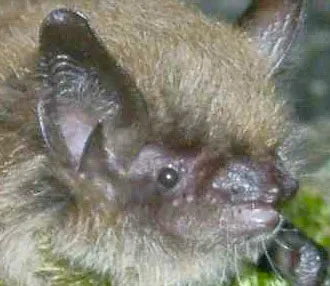
\ Observation, identification, and photograph by David Quinton in the attic of Bourgon Castle in Montourtier on June 25, 2013. Regional status of the species; Biological characteristics
The species is listed as rare
, across most of its European range. The Centre region is a stronghold for this species, particularly during hibernation. With nearly 5,000 individuals, it accounts for half of the known French population.
It is concentrated in about 40 sites, mainly in Berry and the Val de Cher. About 40 breeding sites have been identified.
Species assessed on the Red List: IUCN European Red List (2012): LC (listed as Myotis emarginatus); Red List of Continental Mammals of Metropolitan France (2009): LC (listed as Myotis emarginatus) IUCN Global Red List (November 2012): LC (listed as Myotis emarginatus)
**Conservation Status of the Notched-eared Bat: IUCN Red List Status: Vulnerable Protection: The species is threatened by habitat loss, a decline in food resources, and light pollution.To be effective, management measures must simultaneously take into account the conservation of winter and summer habitats, as well as hunting grounds. For hibernation sites - If a site is closed: ensure appropriate access is maintained and that temperature, humidity, and ventilation conditions are preserved. - From October through April: Do not use the sites for visits, storage, fires, or agricultural activities. - On the surface: Do not store products or materials that could contaminate the ground through seepage. -
** Preservation and development of suitable vegetation around the site.**
For breeding sites—Roofing work must be performed between September and April.
Maintain access points used by bats. - Use non-toxic wood preservative products. Work to be carried out in early winter.**For hunting grounds - Maintain deciduous forest stands, open-structured wooded islands, parks, and riparian woodlands. - Regulate the use of pesticides and other products that affect prey species.**Conservation Measures The notched-eared bat is a bat about the size of a large thumb, with reddish, woolly fur.
This mammal is active only from May through October. It hibernates in vast underground burrows. Breeding colonies are found mainly in attics.
They consist of 10 to 300 females.Known movements between summer and winter roosts are at most around 40 kilometers. This species is very loyal to its roosts. Hunting grounds and diet: The diet is highly specialized, consisting of dipterans and arachnids. The hunting territory covers a radius of about fifteen kilometers, where the species forages along the edges of deciduous forests, in clusters of isolated trees with an open structure, in parks, and along riverbanks.