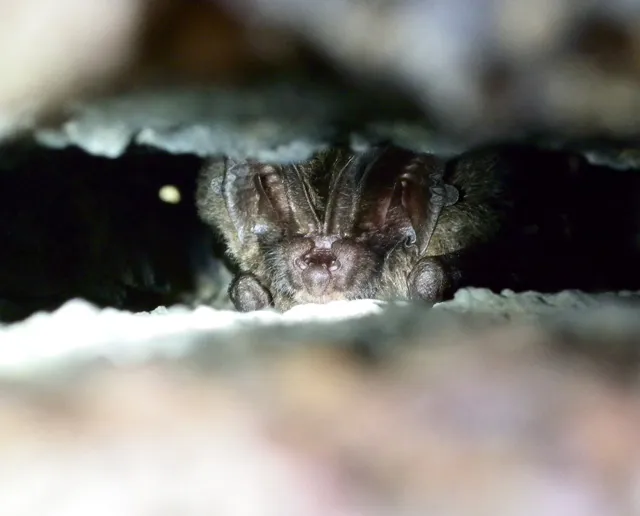
Thanks to David Quinton, Environmental Engineer at the association ID Environment in Mayenne for identifying the names of the various bat species during a visit to the castle in October 2010.
*Although all bat species are fully protected by law, currently,***One in three species is in decline, including the European barbastelle, the lesser horseshoe bat, and the greater mouse-eared bat… which hibernate and breed at the Bourgon Castle and Forest site.**Several factors contribute to this decline: the loss of their habitats, the reduction or destruction of their food sources, the use of toxic products to treat wooden structures, disturbances, roads, direct destruction, and predators.
The loss of their habitats:
It is currently one of the most significant causes of population decline. Bats have a complex life cycle and use several different habitats for hunting, giving birth, and hibernating.
The disappearance or alteration of even one of these habitats will directly threaten them. Thus, the removal of hedgerows, copses, and thickets; the draining of wetlands; the expansion of farmland—often to make way for monoculture farming; and the straightening of waterways are all factors that alter their hunting grounds.
The various shelters used throughout the life cycle—whether for giving birth or hibernating—are not spared: the destruction of old bridges and ruins, sealing of building openings (access to church attics), felling of dead trees, and closing of underground cavities… \